
As-Built Survey: The Record of What Was Actually Built
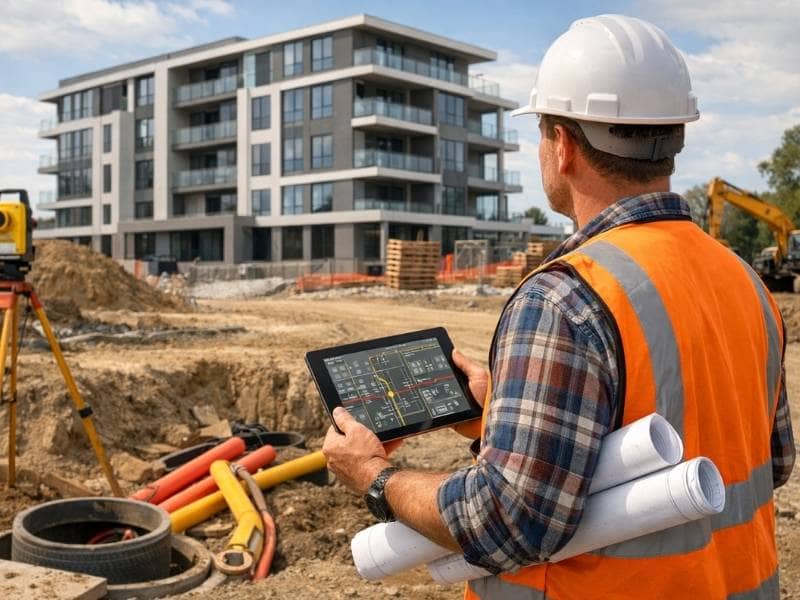
An as-built survey is a record made after construction that shows exactly what was built and where. A surveyor measures the finished structures, utilities, and features on site, then compares them to the original plans. Contractors, owners, and local officials use it to confirm the work was done correctly and to close out permits.
Construction rarely follows the plan to the letter. Walls shift a few inches, pipes get rerouted, and surprises in the ground force changes on the spot. When the work is done, the blueprints pinned to the wall almost never match what truly stands on the site. An as-built survey fixes that gap. It captures the real, finished result so everyone has an accurate record.
What Does an As-Built Survey Record?
An as-built survey documents a project in its completed state. Instead of showing what was planned, it shows what actually exists. A licensed surveyor visits the site after the work is finished and measures the real positions and sizes of everything that was built.
The survey typically records:
- The exact location and size of buildings and other structures.
- Utilities such as water lines, sewer pipes, and electrical runs.
- Pavement, driveways, and parking areas.
- How all of these sit in relation to the property and to each other.
The surveyor then produces a scaled drawing, sometimes called a plat, that lays out these details clearly. The final product can be a marked-up set of the original plans with the changes drawn in, or a digital file the design team can reuse.
How Is It Different From the Original Plans?
This is the heart of an as-built survey, so it is worth being clear. The original construction plans show what the team intended to build before any work started. An as-built survey shows what the team finished, measured in the field after the dust settled.
The two often differ. A pipe might be moved to avoid rock, or a foundation might shift slightly to fit the actual ground. Those field changes are real, but they only become part of the permanent record once a surveyor measures and documents them. The as-built survey turns the loose changes made during the job into one trusted, final record.
Why Do Contractors Order As-Built Surveys?
Contractors and project managers depend on these surveys for several practical reasons.
To Prove the Work Was Done Correctly
An as-built survey gives an official record of what was constructed. It lets everyone compare the finished site against the original design and confirm the work matches what was promised. This keeps owners, engineers, and inspectors aligned on the real result, not the intentions.
To Close Permits and Pass Inspections
Local governments often require an as-built survey before they will sign off on a project. It shows the work meets local codes and zoning rules. In many cases, this survey is a required step to close out a permit and to receive a certificate of occupancy, the document that says a building is legally ready to use.
To Capture Hidden Work Before It Disappears
Some parts of a project get covered up fast, and the chance to record them is short. Underground pipes are the classic example. A sewer line sits in a trench that will soon be filled and packed with soil. A surveyor can record the pipe’s exact position before the trench is closed, so its location is never lost.
To Satisfy Lenders on Funded Projects
On projects backed by a loan, the lender may want proof that the money is paying for the work as planned. An as-built survey verifies that the funded improvements are being built correctly, which protects everyone’s investment.
Who Else Relies on These Surveys?
The value of an as-built survey reaches well beyond the contractor. Several groups use it:
- Property owners who want a true record of what sits on their land.
- Architects and engineers who need accurate data for future design work.
- Inspectors and local officials who confirm the project meets the rules.
- Facility managers who handle repairs, maintenance, and upgrades later on.
Each group gets the same benefit: one shared, accurate picture of reality that they can all trust.
When Do You Need One?
You need an as-built survey at the point where you must prove what was built. The most common moments are:
- At the end of a project, to close permits and earn a certificate of occupancy.
- At key milestones on large jobs, so no important change goes unrecorded along the way.
- Before a trench or wall is covered, to capture hidden utilities while they are still visible.
- Before a future renovation or addition, the new design starts from an accurate record of what already exists.
On smaller projects, a single survey at the finish line is often enough. On large or public works, surveyors may update the record at several stages. Your contract, your local rules, or your lender usually sets the schedule.
The Lasting Value of an Accurate Record
An as-built survey does more than close out today’s project. It becomes the final, recognized version of what stands on the site, long after the crews have left. Future owners, design teams, and repair crews can rely on it to know exactly where things are. When an emergency crew needs to dig, an accurate record shows them where to work and what to avoid.
That long life is why the survey is worth doing well. A clear record now prevents guesswork, delays, and costly mistakes for years to come.